
$83.87
Add to Cart
White Princess Philodendron Flower Rare Plant Live Rare Plant Exotic For Your Garden
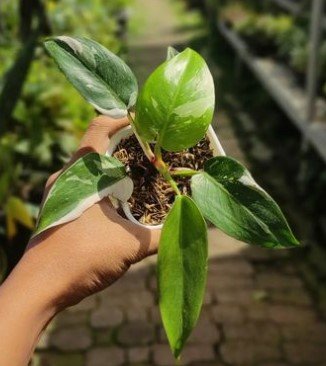
White Princess Philodendron Flower Rare Plant Live Rare Plant Exotic For Your Garden
Philodendron is a large genus of flowering plants in the family Araceae, encompassing a diverse group of tropical plants known for their attractive foliage. Here are some key features and characteristics of Philodendrons:
1. **Foliage**: Philodendrons are admired for their lush, glossy leaves that vary widely in shape and size depending on the species and variety. Leaves can be heart-shaped, arrow-shaped, oval, or even deeply lobed. The foliage ranges in color from dark green to variegated patterns of green, white, yellow, or red.
2. **Growth Habit**: Philodendrons exhibit various growth habits. Some species are climbers and use aerial roots to attach themselves to trees or supports, while others are more bushy or trailing. Many Philodendrons can be trained to climb with the help of moss poles or trellises.
3. **Care**: Philodendrons are generally easy to care for and adaptable to a variety of indoor conditions. They prefer bright, indirect light but can tolerate lower light levels. They thrive in well-draining potting mixtures and should be watered when the top inch or so of soil feels dry. They benefit from occasional misting to increase humidity, especially in dry indoor environments.
4. **Propagation**: Philodendrons can be propagated through stem cuttings. Cuttings should include a node (where leaves emerge) and can be rooted in water or directly in soil. Once roots develop, they can be potted into individual containers.
5. **Uses**: Philodendrons are popular as houseplants and indoor ornamentals due to their attractive foliage and relatively low maintenance. They are commonly used in hanging baskets, on shelves, or as floor plants to add greenery and a tropical feel to indoor spaces.
6. **Toxicity**: Many Philodendron species contain calcium oxalate crystals, which can cause irritation and discomfort if ingested. It's important to keep them out of reach of pets and children.
7. **Varieties**: There are numerous species and cultivars of Philodendrons, each with its own unique leaf shape, size, and coloration. Popular varieties include Philodendron hederaceum (Heartleaf Philodendron), Philodendron scandens (Sweetheart Plant), Philodendron bipinnatifidum (Tree Philodendron), and Philodendron selloum (Split-leaf Philodendron).
Overall, Philodendrons are valued for their versatility, adaptability, and striking foliage, making them a favorite among indoor gardeners and plant enthusiasts looking to enhance their living spaces with vibrant greenery.
In the photo is not factual item...
The size live plant item depends on stock...
Thank you
Philodendron is a large genus of flowering plants in the family Araceae, encompassing a diverse group of tropical plants known for their attractive foliage. Here are some key features and characteristics of Philodendrons:
1. **Foliage**: Philodendrons are admired for their lush, glossy leaves that vary widely in shape and size depending on the species and variety. Leaves can be heart-shaped, arrow-shaped, oval, or even deeply lobed. The foliage ranges in color from dark green to variegated patterns of green, white, yellow, or red.
2. **Growth Habit**: Philodendrons exhibit various growth habits. Some species are climbers and use aerial roots to attach themselves to trees or supports, while others are more bushy or trailing. Many Philodendrons can be trained to climb with the help of moss poles or trellises.
3. **Care**: Philodendrons are generally easy to care for and adaptable to a variety of indoor conditions. They prefer bright, indirect light but can tolerate lower light levels. They thrive in well-draining potting mixtures and should be watered when the top inch or so of soil feels dry. They benefit from occasional misting to increase humidity, especially in dry indoor environments.
4. **Propagation**: Philodendrons can be propagated through stem cuttings. Cuttings should include a node (where leaves emerge) and can be rooted in water or directly in soil. Once roots develop, they can be potted into individual containers.
5. **Uses**: Philodendrons are popular as houseplants and indoor ornamentals due to their attractive foliage and relatively low maintenance. They are commonly used in hanging baskets, on shelves, or as floor plants to add greenery and a tropical feel to indoor spaces.
6. **Toxicity**: Many Philodendron species contain calcium oxalate crystals, which can cause irritation and discomfort if ingested. It's important to keep them out of reach of pets and children.
7. **Varieties**: There are numerous species and cultivars of Philodendrons, each with its own unique leaf shape, size, and coloration. Popular varieties include Philodendron hederaceum (Heartleaf Philodendron), Philodendron scandens (Sweetheart Plant), Philodendron bipinnatifidum (Tree Philodendron), and Philodendron selloum (Split-leaf Philodendron).
Overall, Philodendrons are valued for their versatility, adaptability, and striking foliage, making them a favorite among indoor gardeners and plant enthusiasts looking to enhance their living spaces with vibrant greenery.
In the photo is not factual item...
The size live plant item depends on stock...
Thank you


 ID, DI Yogyakarta