
$69.88
Add to Cart
Silver Sansevieria Succulent Flower House Rare Plant Exotic Plant For Your Garden
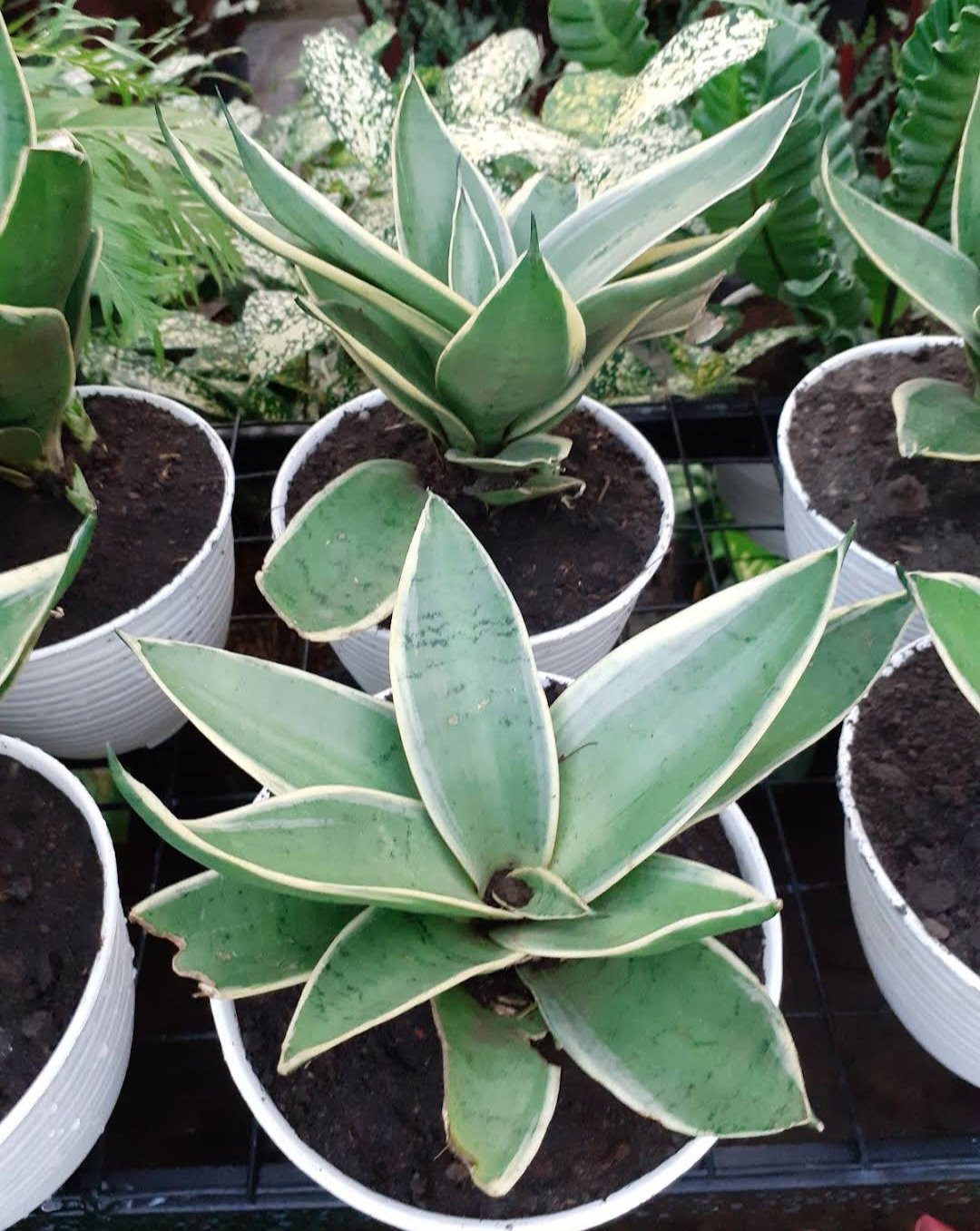
Silver Sansevieria Succulent Flower House Rare Plant Exotic Plant For Your Garden
Sansevieria, also known as Snake Plant or Mother-in-Law's Tongue, is a popular and easy-to-care-for houseplant known for its striking appearance and air-purifying properties. Here are some general care tips for Sansevieria:
Light: Sansevierias are adaptable to various light conditions but prefer indirect sunlight. They can tolerate low light conditions but will grow best in bright, indirect light. Avoid placing them in direct sunlight for prolonged periods as it can scorch the leaves.
Watering: Sansevierias are drought-tolerant plants and are prone to root rot if overwatered. Allow the soil to dry out completely between waterings, then water thoroughly, ensuring excess water drains away from the pot. During the winter months, reduce watering frequency as growth slows down.
Soil: Plant Sansevierias in a well-draining potting mix. A cactus or succulent potting mix works well, or you can create your own mix by combining regular potting soil with perlite or coarse sand to improve drainage.
Temperature: Sansevierias prefer temperatures between 60°F to 85°F (15°C to 29°C). They can tolerate slightly cooler temperatures but are sensitive to frost. Protect them from cold drafts and temperatures below 50°F (10°C).
Humidity: Sansevierias are tolerant of low humidity levels and do not require high humidity to thrive. Average indoor humidity levels are usually sufficient for their growth.
Fertilization: Feed your Sansevieria sparingly during the growing season (spring and summer) with a balanced liquid fertilizer diluted to half strength. Fertilize once a month or less. Avoid fertilizing during the dormant season (fall and winter).
Pruning: Sansevierias are low-maintenance plants and typically do not require pruning. However, you can trim off any dead or damaged leaves as needed to maintain the plant's appearance.
Pests and diseases: Sansevierias are relatively pest-resistant, but they can occasionally be affected by spider mites or mealybugs. Inspect your plant regularly and treat any infestations promptly with insecticidal soap or neem oil. Ensure good air circulation around the plant to prevent fungal diseases.
Repotting: Repot your Sansevieria only when necessary, typically every 2-3 years or when it outgrows its current container. Choose a pot with drainage holes and refresh the potting mix during repotting.
Propagation: Sansevierias can be propagated easily by division or leaf cuttings. To propagate by division, carefully separate the plant into smaller clumps, ensuring each division has roots attached. To propagate by leaf cuttings, cut a healthy leaf into sections and plant them in moist soil or water until roots develop.
By following these care tips, you can enjoy healthy and thriving Sansevieria plants in your home. They are perfect for beginners and can tolerate neglect, making them ideal for busy households.
In the photo is not factual item...
The size live plant item depends on stock...
Thank you
Sansevieria, also known as Snake Plant or Mother-in-Law's Tongue, is a popular and easy-to-care-for houseplant known for its striking appearance and air-purifying properties. Here are some general care tips for Sansevieria:
Light: Sansevierias are adaptable to various light conditions but prefer indirect sunlight. They can tolerate low light conditions but will grow best in bright, indirect light. Avoid placing them in direct sunlight for prolonged periods as it can scorch the leaves.
Watering: Sansevierias are drought-tolerant plants and are prone to root rot if overwatered. Allow the soil to dry out completely between waterings, then water thoroughly, ensuring excess water drains away from the pot. During the winter months, reduce watering frequency as growth slows down.
Soil: Plant Sansevierias in a well-draining potting mix. A cactus or succulent potting mix works well, or you can create your own mix by combining regular potting soil with perlite or coarse sand to improve drainage.
Temperature: Sansevierias prefer temperatures between 60°F to 85°F (15°C to 29°C). They can tolerate slightly cooler temperatures but are sensitive to frost. Protect them from cold drafts and temperatures below 50°F (10°C).
Humidity: Sansevierias are tolerant of low humidity levels and do not require high humidity to thrive. Average indoor humidity levels are usually sufficient for their growth.
Fertilization: Feed your Sansevieria sparingly during the growing season (spring and summer) with a balanced liquid fertilizer diluted to half strength. Fertilize once a month or less. Avoid fertilizing during the dormant season (fall and winter).
Pruning: Sansevierias are low-maintenance plants and typically do not require pruning. However, you can trim off any dead or damaged leaves as needed to maintain the plant's appearance.
Pests and diseases: Sansevierias are relatively pest-resistant, but they can occasionally be affected by spider mites or mealybugs. Inspect your plant regularly and treat any infestations promptly with insecticidal soap or neem oil. Ensure good air circulation around the plant to prevent fungal diseases.
Repotting: Repot your Sansevieria only when necessary, typically every 2-3 years or when it outgrows its current container. Choose a pot with drainage holes and refresh the potting mix during repotting.
Propagation: Sansevierias can be propagated easily by division or leaf cuttings. To propagate by division, carefully separate the plant into smaller clumps, ensuring each division has roots attached. To propagate by leaf cuttings, cut a healthy leaf into sections and plant them in moist soil or water until roots develop.
By following these care tips, you can enjoy healthy and thriving Sansevieria plants in your home. They are perfect for beginners and can tolerate neglect, making them ideal for busy households.
In the photo is not factual item...
The size live plant item depends on stock...
Thank you


 ID, DI Yogyakarta